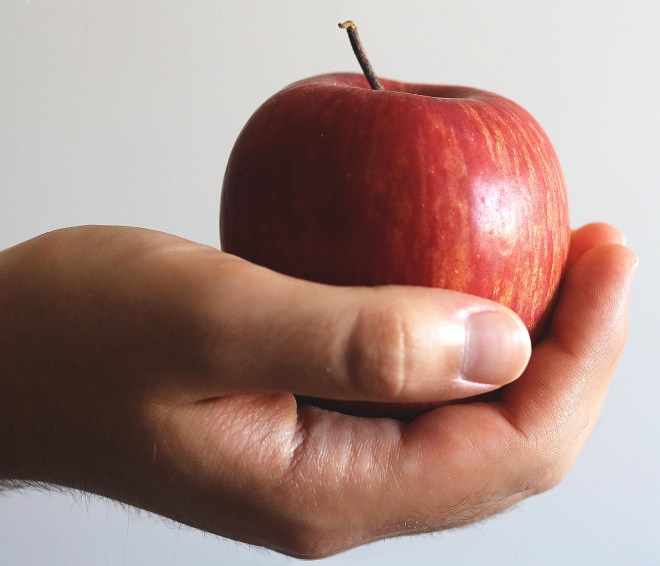
Years ago, I gave an apple to a hungry student. She ate it down to the core, grinning thankfully between every bite. It would be the only food she ate that day.
The parents of this girl—let’s call her Sue—were in the middle of a divorce. As she navigated between her two homes, she often missed meals, and occasionally went whole days without eating. Her parents’ divorce was so chaotic that both her mother and father thought the other parent had filled out the school district’s paperwork for Free and Reduced Meals. But neither one did. The forms went unsigned. The deadline passed. She did not qualify. Each school-provided meal would set her family back $3.60, a fortune for those who counted every nickel.
After being denied at the lunch counter for lack of funds, Sue ping-ponged through the cafeteria. “You gonna eat that?” she asked her peers one by one, and collected a few French fries here, a cup of applesauce there. On days when her friends had nothing to offer, she reluctantly asked her teachers.
I have lost count of how many children I have taught, like Sue, who struggled with food insecurity at home and wrestled with red tape at school.
It’s true that over the years, our lunch policies have inched away from the barbaric. Students no longer pay by cash, but by entering a PIN, preserving the dignity of those who receive lunch for free. In the last few years, students in some districts have been allowed to run up a balance on their account, with the promise they pay their bill before the end of the school year. In other districts, if a student can’t pay, they can enjoy the main offering as a one-time courtesy, instead of the surrogate peanut butter and jelly sandwich, which has endured for many years as the scarlet letter of school cafeterias (I know of several adults who hate PB&J because of the stigma it brought them in grade school). These programs, however, are not universally recognized, and many children still go hungry.
The COVID-19 pandemic brought with it the first federal policy—albeit a temporary one—that addressed food inequality en masse. The emergency school meals program guaranteed every child in every public school in the country a meal at no cost, regardless of their family’s income. But now, post-pandemic, food is once again kept behind an iron gate, and only accessible to those who can afford to pay the gatekeeper.
And with the economy now rebounding, politicians once again cling to ridiculous mantras. In March of 2023, Minnesota Senator Steve Drazkowski confidently declared “hunger is a relative term,” as he vehemently opposed giving a free meal to his constituents’ children. His argument, riddled with fallacies, failed to convince the state’s leaders. Governor Tim Waltz signed Minnesota’s Free School Meals bill into law. Now every student in Drazkowski’s jurisdiction, whether they are ‘relatively hungry’ or not, can eat lunch for free.
Minnesota is just one example. Other districts around the country are finding ways to offer Universally Free Meals. New York City offers free meals to its over one million public school students. Massachusetts initiated the millionaire’s tax, and as a result, they now offer a free lunch to every child in the commonwealth, from Kindergarten to 12th grade—all 896,000 of them. As of 2024, eight states offer all of their public school students a free meal once a day. It is time to use these districts as models for the rest of the nation.
Our children are hungry. And we have it within our power to feed them.
 Joshua Bangera Young