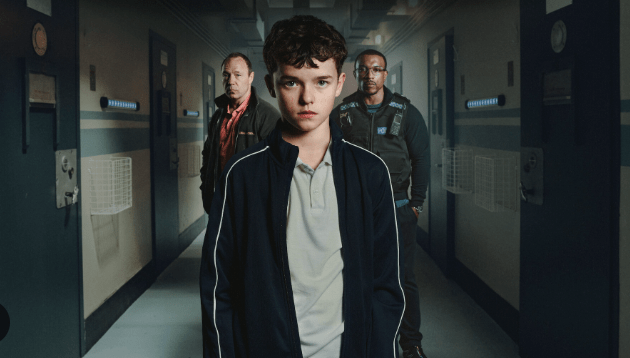
With the advent of lightweight digital cameras and remote-operated drones, cinematographers can now produce elegant long shots deemed impossible a generation ago. Films like Russian Ark (2002), Birdman (2014), and 1917 (2019) have employed long, uninterrupted shots to evoke visceral introspection from their viewers. Yet, the latest cinematic achievement was not shot by some well-established Hollywood enterprise, but by a little-known, independent TV studio in the United Kingdom. Also, it was not just one long uninterrupted shot, but four—one for each of its episodes.
The show in question, Adolescence, pushes the boundaries of what is cinematically possible, but also uses that continuous shot to approach the critical junction of young teens and social media content. The mini-series on Netflix has already amassed 114 million views and has gained so much admiration that British Prime Minister Keir Starmer has promoted showing it in classrooms across the UK to further promote the show’s narrative.
The plot of Adolescence plays out like an episode of Law and Order: 13-year-old Jamie Miller (played by Owen Cooper) is arrested for the murder of a female classmate. As the investigation unfolds in the first episode, evidence is revealed, blame is shifted, reasonable doubt is questioned. The backdrops too are what one would expect from any crime drama: the suspect’s house, the police station, an interrogation room, and so on. But what places Adolescence above other crime-drama syndicates is that these scenes – including the police cruiser ride from the suspect’s house to the police station – are woven together in one long, continuous shot.
In the second episode, which was by far the most technical, the camera glides effortlessly throughout a school, up and down flights of stairs, through classrooms and around corners. At one moment the shot pushes outside to a wide angle of over 300 loud and boisterous students as they line up for a fire drill, then meanders back inside to a small, darkened room, where it captures an intimate conversation just above a whisper. In the final two minutes of the episode, a drone takes the camera high above the town and floats beyond treetops, only to descend into a perfect medium frame of Jamie’s father. To think what the viewer is seeing is the same continuous shot as the entire 51-minute episode adds a layer of complexity that is absent in today’s TV and film production.
Perhaps this omniscient, free-flowing point of view is the ghost of the deceased, which is now unbound by the laws of human movement, an apparition that can eavesdrop on classmates, travel through windows, and trail alongside a sprinting cop with relative ease. Or perhaps the long, unending shot is to mimic those long, turbulent years of adolescence itself, which is confusing and jarring, unpredictable and violent, but in the end, descends softly onto quiet, meditative serenity.
There are moments in the mini-series, however, that are uncomfortable to watch. During the third episode, the on-screen dialogue veers into an unsettling subject and Jamie’s character squirms and writhes in his seat. As I watched, I wanted the scene to cut to some other shot that was not so intuitive and blunt, or to have the tension broken by some lighthearted comic relief. But neither happened. Jamie, along with the viewer, has no option but to confront the elephant in the room, and with the unbroken take, no one can leave, and no one can look away.
When the final episode of the mini-series concluded, I was left pensive and conflicted. I sympathized with the very person who I thought was, at least in part, responsible for the crime. I wanted justice for the victim, but what justice looked like I honestly was not sure. I wanted more from the show, but I also wanted it to end.
Adolescence lays bare the very questions for which there are no clear answers: Who is responsible if our young men grow up to be misogynistic incels or worse yet, murderers? How do we change a culture already saturated with toxic masculinity? How does a family clear their name after bringing trauma upon a whole town? The show offers no clear answers, but perhaps raising these questions to begin with will lead to a much longer conversation.
 Joshua Bangera Young